
Underfloor Heating Manifold Explained: Everything You Need to Know
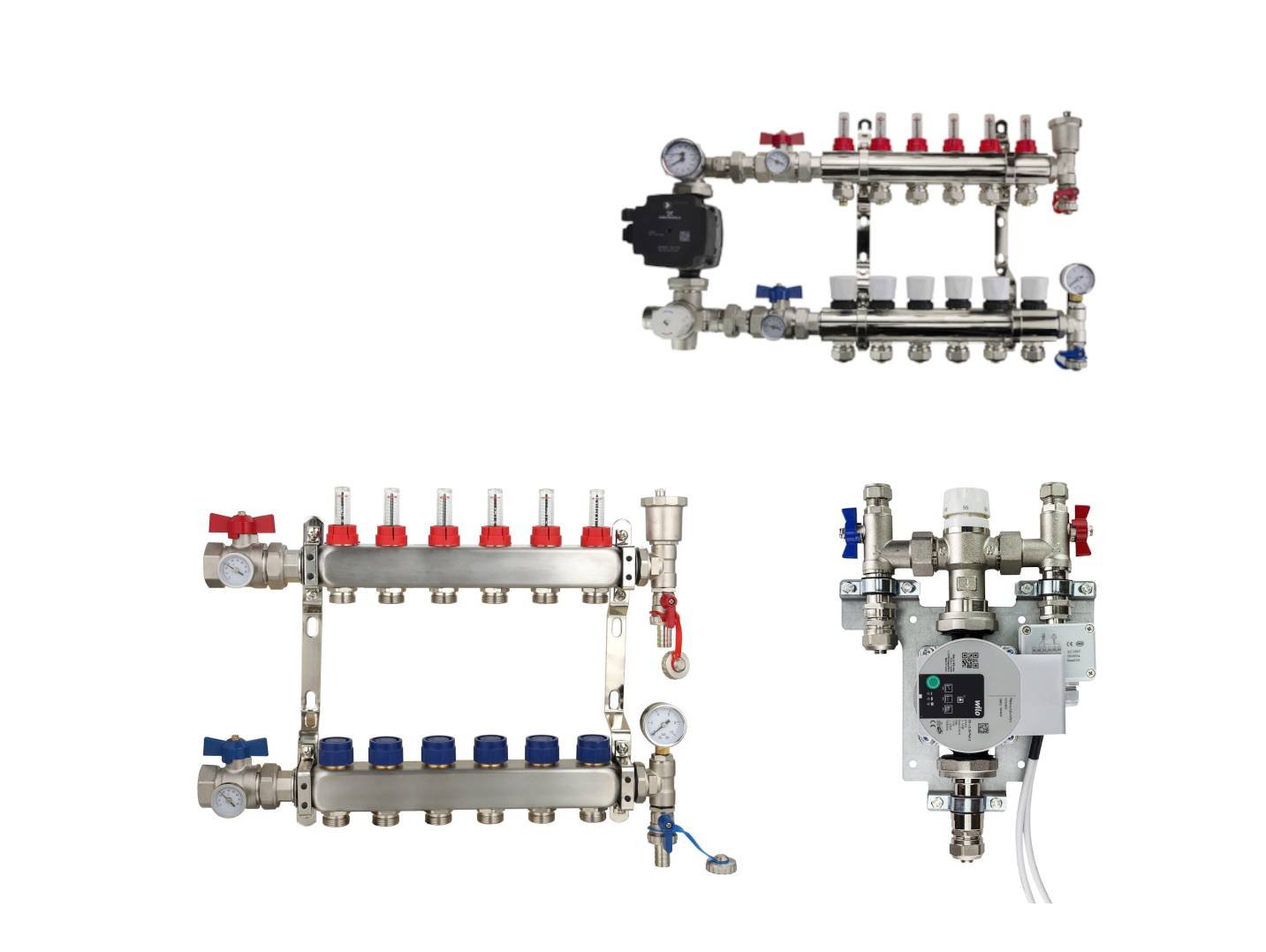
Underfloor Heating Manifold Explained: Everything You Need to Know
Underfloor Heating Manifold Explained
If you’re planning a water underfloor heating (UFH) system, you’ve probably come across the term underfloor heating manifold. But what exactly does it do, and why is it such an important part of your heating system?
Whether you’re installing underfloor heating in a single room or throughout an entire property, understanding how a manifold works will help you choose the right components and achieve the best system performance.
In this guide, we’ll explain everything you need to know about underfloor heating manifolds, including how they work, the different types available, and how to choose the right one for your project.
What Is an Underfloor Heating Manifold?
An underfloor heating manifold is the central distribution point of a wet underfloor heating system. It connects the heat source, such as a boiler or air source heat pump, to the individual heating circuits installed beneath your floor.
Think of the manifold as the “heart” of your UFH system. It distributes warm water evenly through each pipe loop and collects the cooler return water before sending it back to the heat source.
Without a manifold, it would be impossible to balance the flow of water between multiple heating circuits.
What Does an Underfloor Heating Manifold Do?
A manifold performs several important functions:
- Distributes heated water to every UFH loop
- Balances water flow between circuits
- Allows each loop to be isolated for maintenance
- Enables automatic temperature control with actuators
- Removes trapped air from the system
- Provides filling, draining and flushing points
- Monitors system pressure and water flow
Modern manifolds also allow every room to be controlled independently when connected to room thermostats and thermal actuators.
Main Components of an Underfloor Heating Manifold
A standard manifold assembly usually consists of several key components.
Flow Manifold
The flow manifold supplies heated water into each heating loop.
Each outlet normally includes a flow meter, allowing the installer to adjust the flow rate for every circuit individually. This balancing process ensures that each room receives the correct amount of heat.
Return Manifold
The return manifold collects cooler water after it has travelled through the floor pipes.
This side of the manifold contains thermostatic valves where 230V or 24V actuators can be installed. The actuators open and close individual heating zones based on signals from room thermostats.
Flow Meters
Flow meters display and regulate water flow through each loop.
Correct flow balancing is essential because pipe lengths often vary from room to room. Without balancing, some areas could become warmer than others.
Automatic Air Vent
Air naturally enters heating systems during installation and maintenance.
The automatic air vent removes trapped air, helping prevent:
- Cold spots
- Noise within the pipework
- Reduced circulation
- Poor heating performance
Fill and Drain Valves
These valves allow installers to:
- Fill the system
- Flush each circuit
- Remove debris
- Pressure test the installation
They also make future maintenance much easier.
Brass vs Stainless Steel Manifolds
Two of the most common manifold materials are brass and stainless steel.
Brass Manifolds
Brass manifolds are extremely popular in domestic installations because they are:
- Durable
- Corrosion resistant
- Reliable
- Cost-effective
They provide excellent long-term performance in sealed heating systems.
Stainless Steel Manifolds
Stainless steel manifolds offer additional corrosion resistance and are often chosen for:
- Larger systems
- Commercial buildings
- Premium residential projects
Both options perform exceptionally well when manufactured to a high standard.
How Many Ports Do You Need?
Each heating loop requires its own manifold port.
Typical manifold sizes include:
- 2 Port
- 3 Port
- 4 Port
- 5 Port
- 6 Port
- 7 Port
- 8 Port
- 9 Port
- 10 Port
- 11 Port
- 12 Port
The correct size depends entirely on your pipe design.
For example:
- Kitchen – 1 loop
- Living room – 2 loops
- Bedroom – 1 loop
- Bathroom – 1 loop
This property would require a 5-port manifold.
If you’re unsure, our team can prepare a free CAD pipe layout and recommend the correct manifold size.
Do You Need a Mixing Valve?
This depends on your heat source.
Boiler Systems
Traditional gas or oil boilers usually produce water at temperatures between 60–80°C.
Underfloor heating normally operates at around 35–45°C.
In these systems, a blending (mixing) valve is required to reduce the water temperature before it enters the floor.
Heat Pump Systems
Modern air source and ground source heat pumps operate at much lower flow temperatures.
Because the heat pump already supplies water at the correct temperature, non-blending pump sets are typically used.
This improves efficiency and allows the heat pump to operate as designed.
Can Each Room Be Controlled Separately?
Yes.
One of the biggest advantages of underfloor heating is independent room control.
Each room thermostat communicates with a wiring centre, which controls the actuator installed on the manifold.
When a room reaches the desired temperature:
- The thermostat sends a signal.
- The actuator closes.
- Water stops flowing through that heating loop.
This provides excellent comfort while reducing energy consumption.
Why Is System Balancing So Important?
Every heating loop is a different length.
Without balancing:
- Short loops receive too much flow.
- Long loops receive too little.
- Rooms heat unevenly.
Using the manifold flow meters, installers adjust each circuit until the correct flow rate is achieved.
A properly balanced system provides:
- Even room temperatures
- Faster warm-up times
- Lower running costs
- Better heat pump efficiency
Where Should the Manifold Be Installed?
The manifold should ideally be positioned:
- Close to the centre of the heating zones
- In an accessible location
- Inside a manifold cabinet or utility room
- Where pipe runs can be kept as short as possible
Good accessibility makes servicing much easier throughout the life of the system.
Common Questions About Underfloor Heating Manifolds
Can I extend a manifold later?
Yes. Some systems allow extension kits, but it is generally best to choose the correct manifold size during the design stage.
Do manifolds require maintenance?
Very little.
Occasionally you may need to:
- Check system pressure
- Bleed air
- Inspect actuators
- Flush the system if required
Most manifolds provide many years of reliable operation with minimal maintenance.
Are manifolds compatible with smart thermostats?
Yes.
Most modern manifolds can be used with smart heating controls, provided compatible wiring centres and actuators are installed.
Why Choose The Underfloor Heating Expert?
At The Underfloor Heating Expert, we supply high-quality:
- Brass underfloor heating manifolds
- Stainless steel manifolds
- Auto-balancing manifolds
- Non-blending and blending pump sets
- Wiring centres
- Thermal actuators
- Smart thermostats
- Complete underfloor heating systems
We also provide a FREE CAD pipe layout and quotation, ensuring you receive the correct manifold size and system design before purchasing.
Our experienced team is always available to help with product selection and technical advice.
Final Thoughts
The manifold is one of the most important components of any wet underfloor heating system. It controls water distribution, balances every heating loop, and allows individual room temperature control for maximum comfort and efficiency.
Choosing the correct manifold size, pump set, and controls is essential for reliable long-term performance.
If you’re planning a new underfloor heating installation or need help selecting the right manifold, contact The Underfloor Heating Expert. We’ll be happy to provide expert advice, a free CAD pipe layout, and a no-obligation quotation.
