
Underfloor Aluminium Foil Thermal Insulation – Why Every Underfloor Heating System Needs It
Underfloor Aluminium Foil Thermal Insulation – Why Every Underfloor Heating System Needs It
When installing a water underfloor heating system, most people focus on the heating pipes, manifolds, and thermostats. While these components are essential, one often-overlooked product can significantly improve the performance and longevity of the entire installation: underfloor aluminium thermal insulation foil.
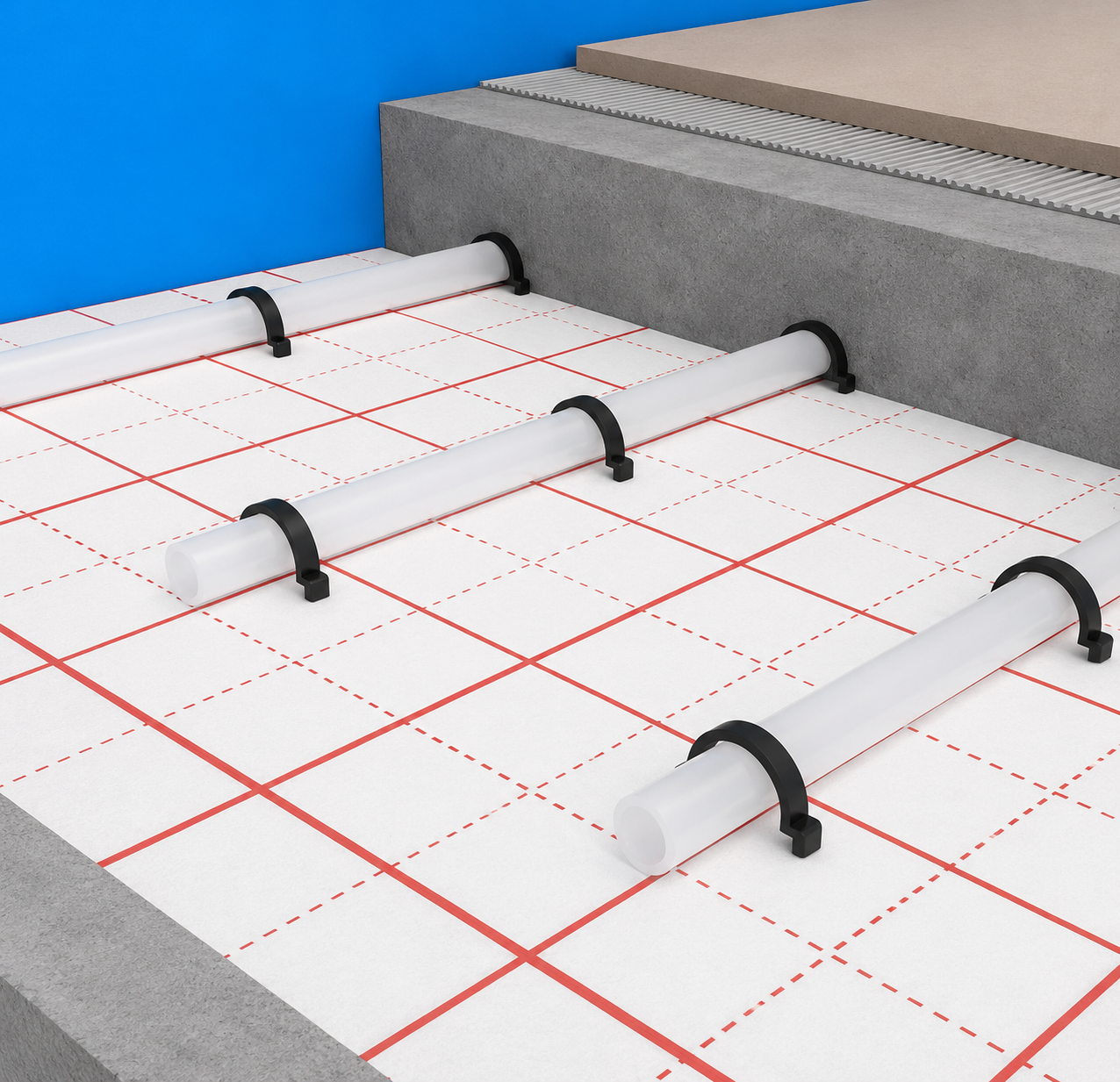
Aluminium thermal insulation foil is a simple yet highly effective addition to any underfloor heating project. Acting as both a reflective thermal layer and a vapour barrier, it helps maximise system efficiency while protecting the insulation beneath the screed. It is commonly installed directly over insulation boards before laying underfloor heating pipes, creating a professional foundation for the heating system.
In this guide, we’ll explain what underfloor aluminium thermal insulation is, how it works, and why it should be part of almost every wet underfloor heating installation.
What Is Underfloor Aluminium Thermal Insulation?
Underfloor aluminium thermal insulation is a thin reflective foil designed specifically for underfloor heating systems.
Although only around 0.1mm thick, it performs several important functions:
- Reflects radiant heat upwards.
- Reduces downward heat loss.
- Acts as a vapour barrier.
- Protects insulation boards from moisture.
- Makes pipe installation easier thanks to printed grid markings.
The product is supplied in 1m × 50m rolls, making it suitable for both domestic and commercial installations.
Why Is Reflective Foil Important?
Heat always travels towards colder areas.
Without a reflective layer, part of the energy produced by the heating pipes can be absorbed by the structural floor beneath the insulation.
Aluminium foil reflects radiant heat back towards the heated floor, helping more of the generated energy reach the room where it is needed.
Although the insulation boards themselves perform most of the thermal insulation, the reflective foil provides an additional layer of efficiency by reducing radiant heat losses.
This means:
- faster warm-up times,
- improved comfort,
- more consistent floor temperatures,
- potentially lower energy consumption over time.
Acts as an Effective Vapour Barrier
Concrete slabs naturally contain moisture.
If moisture migrates into insulation boards over time, their thermal performance can be reduced.
Aluminium thermal insulation creates a protective vapour barrier between the concrete slab and the insulation layer, helping preserve the insulation’s effectiveness.
This additional protection is particularly valuable for:
- new-build properties,
- ground-floor installations,
- extensions,
- garages converted into living spaces,
- areas with higher moisture levels.
Easier Pipe Installation
One of the biggest practical benefits of aluminium thermal insulation is the printed installation grid.
The grid allows installers to:
- maintain accurate pipe spacing,
- keep pipe runs straight,
- measure loop distances more easily,
- speed up installation.
Whether installing pipes at 100mm, 150mm or 200mm centres, the printed guide helps achieve a cleaner, more professional finish.
For DIY installers, this makes planning much simpler, while professional heating engineers benefit from improved installation speed.
Compatible with Most Water Underfloor Heating Systems
Reflective insulation foil is suitable for virtually every screed-based water underfloor heating installation.
It can be used with:
- clip rail systems,
- staple systems,
- castellated (egg crate) panels,
- mesh reinforcement systems,
- traditional screed installations.
Because the foil is installed before the heating pipes, it works with almost any installation method.
Also Useful Behind Radiators
Although designed primarily for underfloor heating, aluminium thermal insulation has other applications around the home.
Many installers use it behind radiators mounted on external walls.
The reflective surface helps reduce heat loss into the wall and redirects more warmth back into the room.
This makes it a versatile product for improving heating efficiency throughout the property.
Suitable Under Laminate Floors
The foil can also act as a vapour barrier when installing laminate flooring.
Moisture protection is particularly important when fitting floating floors over concrete subfloors.
Using a dedicated vapour barrier helps protect the flooring from moisture-related issues while supporting the overall performance of the floor construction.
Typical Installation Process
Installing aluminium thermal insulation is straightforward.
A typical installation sequence is:
- Prepare and clean the concrete subfloor.
- Install insulation boards.
- Roll out the aluminium thermal insulation foil.
- Tape joints where required.
- Install clip rails, staples or castellated panels.
- Lay the underfloor heating pipe.
- Pressure test the system.
- Pour the screed.
- Install the final floor covering after curing.
The lightweight roll makes installation quick even on larger projects.
Why Good Floor Preparation Matters
Even the highest-quality underfloor heating components cannot perform properly if the floor build-up is incorrect.
A professional floor construction should include:
- a level subfloor,
- adequate insulation,
- moisture protection,
- correctly spaced heating pipes,
- appropriate screed depth.
Each layer works together to improve heating performance and system longevity.
Skipping relatively inexpensive components such as vapour barriers or reflective foil may reduce the overall effectiveness of the installation.
Common Applications
Aluminium thermal insulation is suitable for many property types, including:
- new-build homes,
- extensions,
- self-build projects,
- commercial buildings,
- offices,
- schools,
- apartments,
- renovation projects.
Because it occupies virtually no floor height, it can be incorporated into most screed-based floor constructions.
Storage and Handling
To maintain product performance, the foil should be:
- stored indoors in dry conditions,
- protected from prolonged UV exposure,
- kept away from solvent-based chemicals,
- transported carefully to prevent damage.
Proper storage helps preserve the material until installation.
Frequently Asked Questions
Does aluminium foil replace insulation boards?
No.
The foil complements insulation boards but does not replace them. Insulation boards provide the primary thermal resistance, while the foil adds reflective performance and moisture protection.
Is it suitable for water underfloor heating?
Yes.
It has been specifically designed for use beneath wet underfloor heating systems installed within screed floors.
Can DIY installers use it?
Absolutely.
The printed grid makes it particularly helpful for first-time installers, allowing accurate pipe positioning and faster installation.
Will it increase floor height?
No.
At approximately 0.1mm thick, it adds virtually no additional floor height.
Conclusion
While aluminium thermal insulation may seem like a small part of an underfloor heating system, it performs several valuable functions in a single product.
It reflects radiant heat, protects insulation boards from moisture, provides a vapour barrier, and simplifies pipe installation through its printed guide grid. These benefits help create a more efficient, reliable, and professional underfloor heating installation.
Whether you’re installing a new water underfloor heating system in a self-build home or completing a large commercial project, aluminium thermal insulation is a practical addition that supports long-term system performance.
Choosing quality installation materials from the beginning helps ensure your underfloor heating system delivers comfortable, energy-efficient warmth for many years to come.
