
Radiators vs Underfloor Heating – Or Could You Have Both?
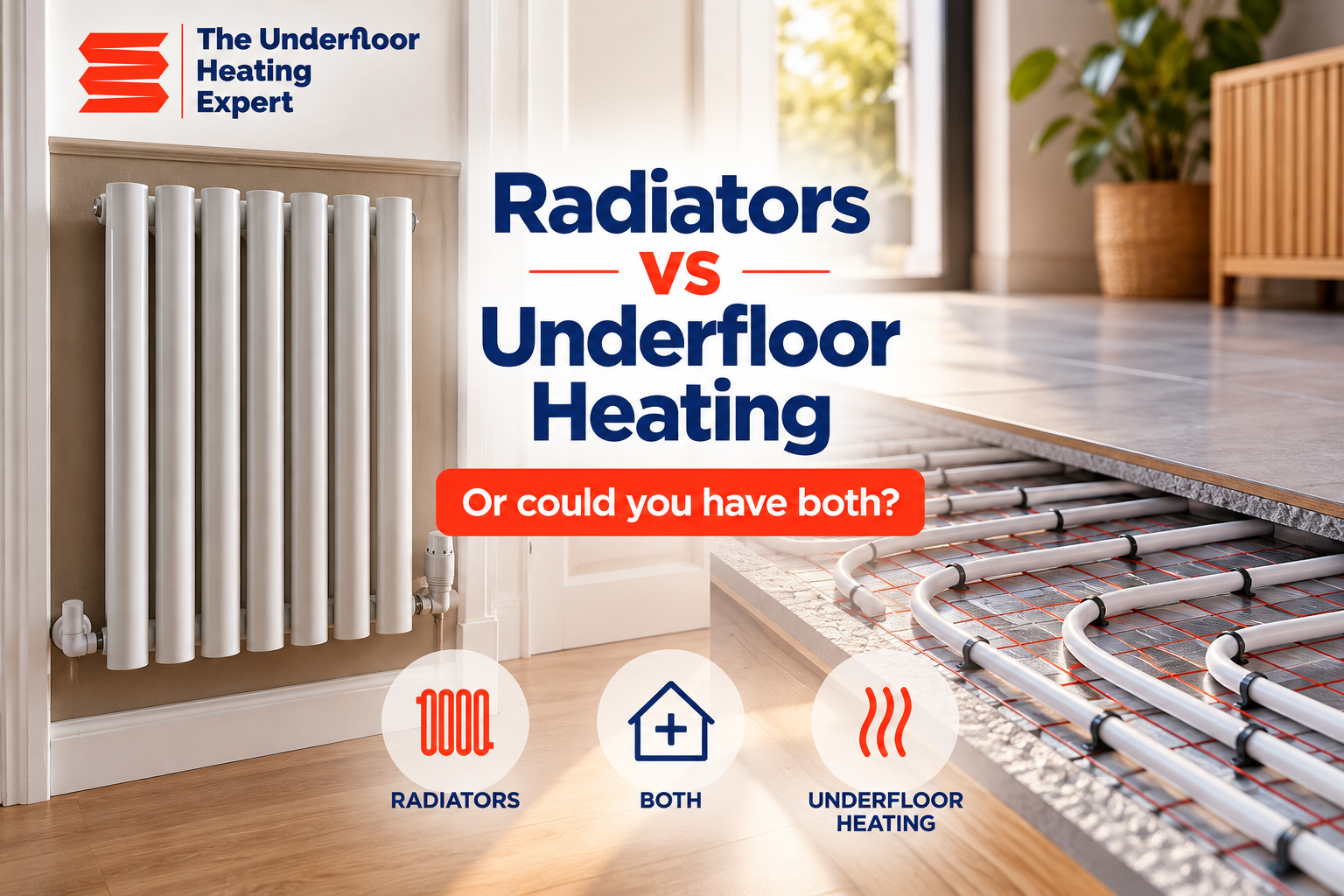
Radiators vs Underfloor Heating – Or Could You Have Both?
When planning a new heating system or upgrading your existing one, one of the biggest decisions is whether to choose traditional radiators or underfloor heating (UFH).
Both systems have their advantages, but which one is right for your home? And what if you didn’t have to choose between them?
The good news is that radiators and underfloor heating can work together, giving you the flexibility to create a comfortable, efficient heating system that suits your home and lifestyle.
Let’s explore the options.
Radiators – The Traditional Choice
Radiators have been a popular heating solution in UK homes for decades. They’re familiar, relatively straightforward to install and capable of heating rooms quickly.
Advantages of Radiators
- Quick heat-up times: Radiators can warm a room relatively quickly, making them useful in spaces where heating is needed for shorter periods.
- Lower initial installation costs: If your home already has pipework for radiators, replacing or upgrading them can be relatively inexpensive.
- Easy to control: Individual radiator thermostats allow you to adjust temperatures in different rooms.
- Ideal for existing homes: Radiators can be a practical choice when you want to avoid major renovation work.
Disadvantages of Radiators
Radiators take up valuable wall space, potentially limiting furniture placement and interior design options.
They also typically require higher water temperatures than underfloor heating, which can affect overall system efficiency, particularly when paired with a heat pump.
Because radiators primarily heat the surrounding air, temperature distribution can sometimes be less even throughout the room.
Underfloor Heating – Comfort from the Ground Up
Underfloor heating has become increasingly popular in both new builds and renovation projects across the UK.
Instead of relying on wall-mounted radiators, UFH distributes heat across the floor, creating a comfortable and consistent indoor temperature.
Advantages of Underfloor Heating
1. Even Heat Distribution
Underfloor heating provides gentle, consistent warmth across the room, helping to reduce cold spots.
2. Improved Energy Efficiency
Wet underfloor heating systems generally operate at lower water temperatures than traditional radiators. When properly designed and insulated, this can improve heating efficiency, especially when used with heat pumps.
3. More Space and Design Freedom
Without radiators taking up wall space, you have greater flexibility when arranging furniture or designing your interiors.
4. Comfortable Floors
There’s nothing quite like stepping onto a comfortably warm floor on a cold winter morning, particularly in bathrooms and kitchens.
5. Perfect for Modern Heating Systems
Water-based underfloor heating works particularly well with low-temperature heating systems, including air source and ground source heat pumps.
Disadvantages of Underfloor Heating
Underfloor heating can involve higher initial installation costs, especially where existing floors need to be lifted or modified.
It can also take longer to respond to temperature changes, particularly when installed within a thick screed.
However, modern low-profile and overlay underfloor heating systems can make installation much easier in renovation projects, often without the need for extensive floor excavation.
Radiators and Underfloor Heating – Why Not Have Both?
Here’s something many homeowners don’t realise:
You don’t have to choose one system for your entire property.
Combining radiators with underfloor heating can be a practical and cost-effective solution, particularly when renovating an existing home.
For example, you could install:
- Underfloor heating downstairs: Ideal for open-plan kitchens, living rooms, dining areas and extensions.
- Radiators upstairs: A practical option for bedrooms, especially where you don’t want to disturb existing floors.
- Underfloor heating in bathrooms: Perfect for adding extra comfort beneath tiled floors.
- Radiators in selected rooms: Useful where faster temperature response is preferred.
This approach allows you to enjoy the benefits of underfloor heating without necessarily replacing every radiator in your home.
Can Radiators and Underfloor Heating Run from the Same Boiler?
Yes, absolutely!
Radiators and wet underfloor heating can operate from the same boiler, provided the system is designed and controlled correctly.
Traditional radiator circuits often operate at higher water temperatures than underfloor heating circuits.
For this reason, a combined system may require:
- A suitable underfloor heating manifold
- A mixing valve and pump arrangement where required
- Separate heating zones
- Appropriate thermostats and controls
- Correct system balancing
These components help ensure each part of the heating system receives the appropriate water temperature and operates efficiently.
If you’re using a heat pump, the system should be designed around suitable low flow temperatures. Existing radiators may need to be checked or upgraded to ensure they can deliver enough heat.
Which Option Is More Energy Efficient?
There isn’t one answer that applies to every property.
The efficiency of your heating system depends on several factors, including insulation, heat loss, floor construction, heating controls and the type of heat source.
Underfloor heating can offer an efficiency advantage because it typically operates at lower water temperatures.
However, correctly sized radiators can also perform efficiently, particularly when designed for lower-temperature operation.
The most important factor is choosing a heating system that is properly designed for your property, rather than simply choosing between radiators and underfloor heating.
What About Installation Costs?
Radiators are often cheaper to install initially, particularly if you’re keeping existing pipework.
Underfloor heating generally requires a higher upfront investment, but it can provide long-term comfort and potential efficiency benefits.
If you’re already renovating your kitchen, replacing flooring or building an extension, it may be the ideal time to consider installing UFH.
Modern overlay systems can also provide a practical solution where floor height is limited.
So, What’s the Best Choice for Your Home?
| Your Situation | Worth Considering |
|---|---|
| New build property | Underfloor heating throughout |
| Kitchen extension | Underfloor heating |
| Existing home with radiators | A combination of both |
| Upstairs bedrooms | Radiators or UFH, depending on the renovation |
| Bathroom renovation | Underfloor heating |
| Heat pump installation | Low-temperature UFH and/or suitably sized radiators |
Ultimately, the best heating system is the one that suits your property, budget and lifestyle.
Final Thoughts – The Best of Both Worlds
The debate between radiators and underfloor heating doesn’t always need a winner.
Radiators offer convenience, familiarity and fast heat-up times, while underfloor heating provides even warmth, design flexibility and excellent compatibility with low-temperature heating systems.
For many UK homeowners, combining the two systems offers the best of both worlds.
Whether you’re renovating a single room, building an extension or planning a complete heating upgrade, getting the design right from the beginning makes all the difference.
Need Advice on Your Underfloor Heating Project?
At The Underfloor Heating Expert, we help homeowners and installers choose the right underfloor heating products for their projects.
From low-profile overlay systems to manifolds, controls and installation accessories, we’re here to help you find a solution that works for your home.
Explore our underfloor heating solutions or contact our team for expert advice.
The Underfloor Heating Expert – Helping You Create a Warmer, More Comfortable Home.
