
Egg Crate Panels for Water Underfloor Heating – Everything You Need to Know
Egg Crate Panels for Water Underfloor Heating – Everything You Need to Know
Egg crate panels, also known as castellated panels or pipe clip panels, are one of the most popular methods of installing water underfloor heating systems. They provide a fast, secure and reliable way to position heating pipes while ensuring consistent spacing throughout the installation. Whether you’re a homeowner planning a renovation or a professional installer working on a new-build project, egg crate panels offer an efficient solution that reduces installation time and improves the quality of the finished system.
In this guide, we’ll explain what egg crate panels are, how they work, their advantages and disadvantages, and where they are best used.
What Are Egg Crate Panels?
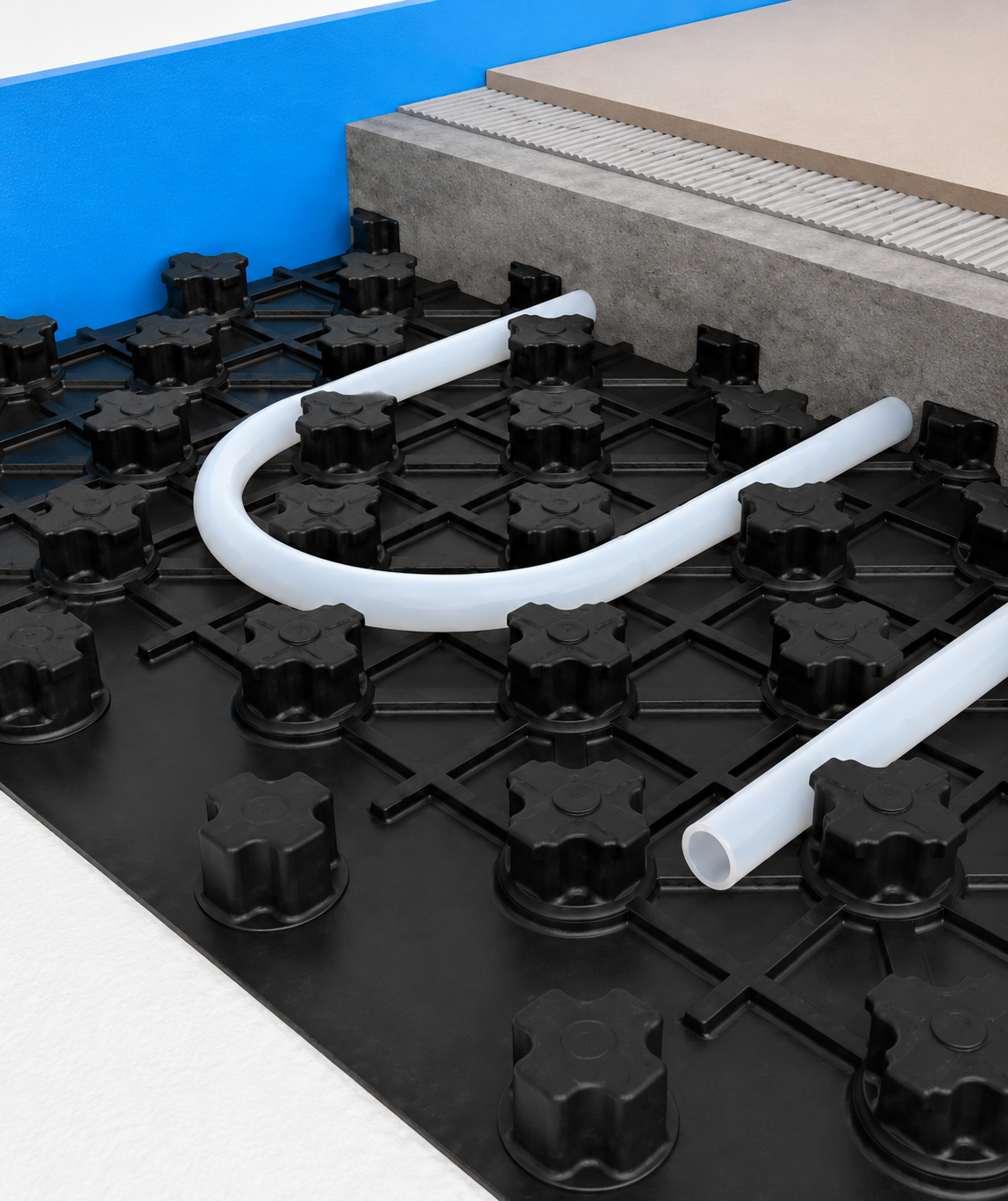
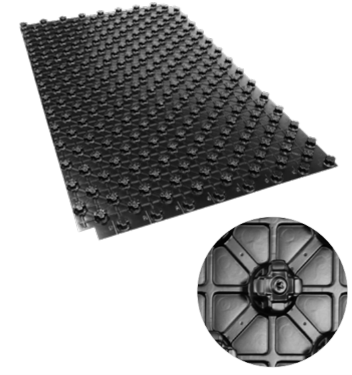
Egg crate panels are rigid insulation boards featuring a grid of raised studs that resemble an egg carton. These studs are specifically designed to hold underfloor heating pipes securely in place without the need for additional clips or fixing rails.
The panels are typically manufactured from high-density expanded polystyrene (EPS) with a durable laminated surface that provides moisture resistance and additional strength during installation.
Most egg crate panels are designed for:
- 15mm pipe
- 16mm pipe
The pipe simply presses between the studs where it locks firmly into position.
How Do Egg Crate Panels Work?
https://theunderfloorheatingexpert.com/category/castellated-egg-crate-panels/
Installation begins by laying the castellated panels across the prepared floor. The interlocking edges help create a continuous insulated surface with minimal gaps.
Once the panels are installed, the heating pipe is pushed between the castellations following the pipe layout design.
The raised studs hold the pipe securely, allowing installers to create:
- straight pipe runs
- tight bends
- spiral layouts
- serpentine layouts
without requiring cable ties or additional fixing systems.
After pressure testing the system, the entire floor is covered with a sand and cement screed or flowing anhydrite screed, which completely encapsulates the pipework.
The screed then acts as a large thermal mass, distributing heat evenly across the floor.
Main Benefits of Egg Crate Panels
Fast Installation
One of the biggest reasons professionals choose egg crate panels is installation speed.
Unlike traditional insulation boards that require separate pipe clips, egg crate panels hold the pipe immediately after it is pressed into position.
This can significantly reduce installation time, particularly on larger projects.
Accurate Pipe Spacing
Correct pipe spacing is essential for achieving even heat output across the floor.
The castellations naturally guide the installer, making it easy to maintain consistent spacing such as:
- 100mm
- 150mm
- 200mm
- 250mm
depending on the heating design.
Uniform spacing helps eliminate cold spots while improving system efficiency.
Secure Pipe Retention
Once installed, the pipe remains securely locked between the studs.
This prevents movement while walking across the floor during installation and helps keep the pipe exactly where it should be during screed pouring.
Secure pipe retention also reduces the risk of loops lifting or floating.
Integrated Insulation
Most egg crate panels include an insulation layer underneath the castellated surface.
The insulation reduces downward heat loss and directs more heat upwards into the room where it is needed.
Better insulation means:
- improved heating efficiency
- faster warm-up times
- lower running costs
Suitable for Large Areas
Egg crate panels are particularly effective for:
- new-build homes
- extensions
- commercial buildings
- schools
- offices
- apartments
where large floor areas require multiple heating circuits.
The simple installation process helps contractors complete projects more quickly while maintaining consistent quality.
Compatible with Different Floor Finishes
Once the screed has cured, almost any floor covering can be installed, including:
- ceramic tiles
- porcelain tiles
- engineered wood
- laminate flooring
- vinyl flooring
- carpet (with suitable thermal resistance)
This makes egg crate panels suitable for almost every room in the home.
Pipe Sizes
Most systems use 16mm PERT or PEX pipe, although some manufacturers also produce versions suitable for 15mm pipe.
A correctly designed system typically limits each heating loop to approximately 100 metres when using 16mm pipe to maintain efficient flow rates and balanced system performance.
Professional CAD designs ensure loop lengths remain within recommended limits.
Are Egg Crate Panels Suitable for Renovation Projects?
They can be, although they are most commonly used in new-build properties where a full screed floor is being installed.
Because the pipe is embedded within a screed layer, the overall floor build-up is higher than low-profile retrofit systems.
If floor height is restricted, routed insulation panels or overlay boards may be a better solution.
Egg Crate Panels vs Clip Rail Systems
Many installers compare castellated panels with traditional clip rail installations.
Egg Crate Panels
Advantages:
- Faster installation
- Pipe held securely without clips
- Consistent spacing
- Integrated insulation
- Cleaner installation
- Reduced labour
Clip Rail Systems
Advantages:
- Greater flexibility
- Suitable for unusual room shapes
- Can use thicker insulation
- Lower material cost in some applications
Both systems produce excellent heating performance when correctly installed.
The choice often depends on project size, installer preference and floor construction.
Installation Tips
To achieve the best results:
- Ensure the subfloor is clean and level.
- Lay insulation panels tightly together.
- Follow the CAD pipe layout carefully.
- Avoid exceeding maximum loop lengths.
- Pressure test before screeding.
- Keep pipes under pressure during screed installation.
- Allow the screed to cure fully before commissioning the heating.
These simple steps help maximise system lifespan and efficiency.
Common Applications
Egg crate panels are ideal for:
- New-build houses
- Property developments
- Commercial premises
- Ground floor heating
- Extensions
- Conservatories
- Self-build projects
They are especially popular where speed of installation is important.
Frequently Asked Questions
Do I need additional pipe clips?
No.
The castellated studs securely retain the pipe without additional fixing clips.
Can egg crate panels be cut?
Yes.
Panels can easily be trimmed around walls, doorways and awkward room shapes using a sharp utility knife.
What screed depth is required?
The required screed depth depends on the system design and local building regulations.
Always follow the screed manufacturer’s recommendations.
Can I install them myself?
Experienced DIY installers can install egg crate panels, but the heating design, pressure testing and commissioning should always be carried out correctly. If you’re unsure, it’s recommended to use a qualified heating installer.
Why Choose Egg Crate Panels?
For many installers, egg crate panels provide the perfect balance between speed, reliability and performance.
Their integrated insulation, secure pipe retention and simple installation process make them one of the most widely used solutions for modern water underfloor heating systems.
When combined with a professionally designed pipe layout, quality manifold and correctly sized heating circuits, egg crate panels help deliver an efficient, comfortable heating system that can provide reliable performance for decades.
Whether you’re building a new home, extending your property or specifying a commercial heating installation, egg crate panels remain one of the smartest choices for achieving fast installation, consistent heat distribution and long-term energy efficiency.
