
Can Underfloor Heating Replace Radiators? The Complete UK Homeowner’s Guide
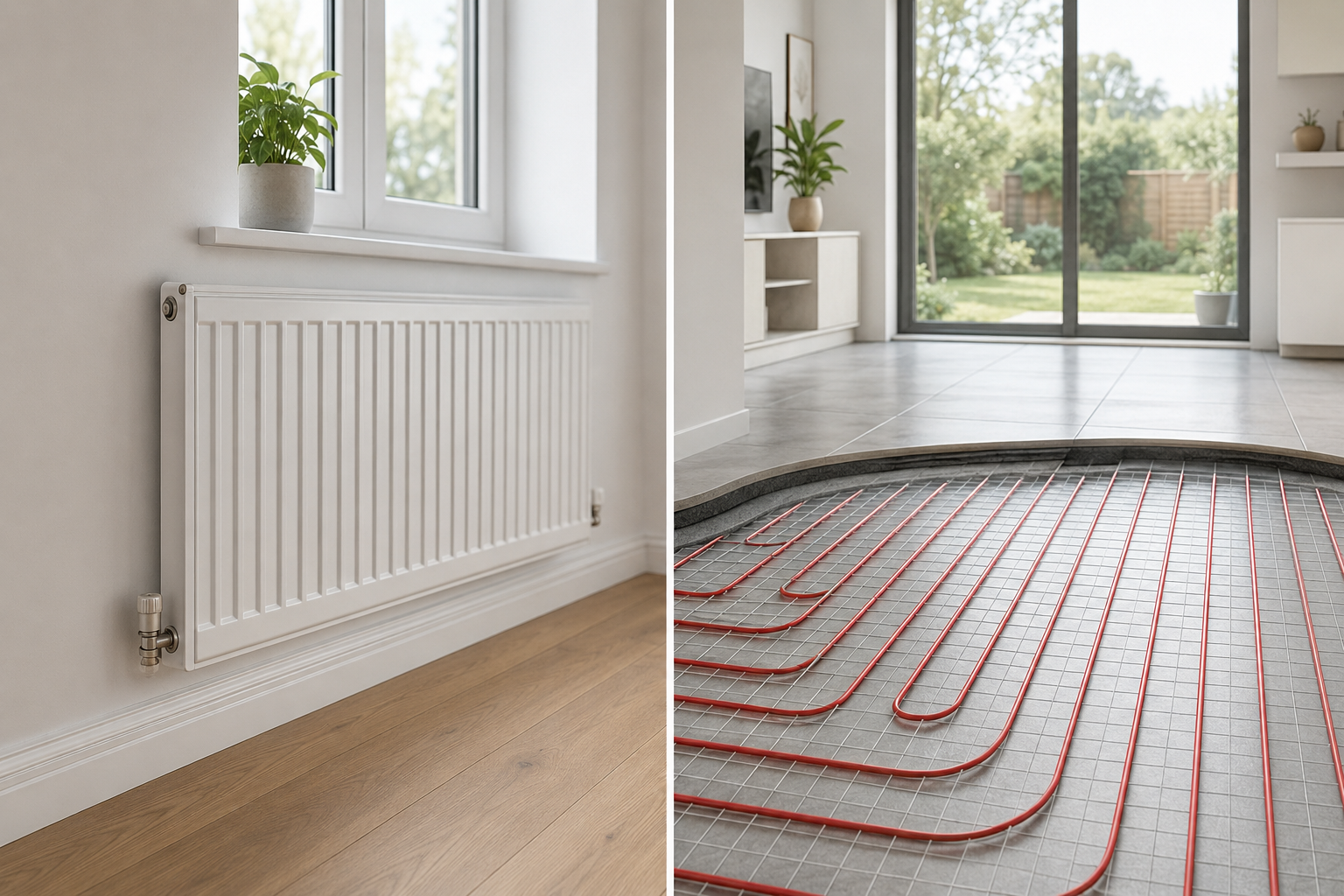
Can Underfloor Heating Replace Radiators?
If you’re planning a home renovation, extension, or new build project, one question often comes up:
Can underfloor heating replace radiators completely?
The short answer is yes. In many modern homes, underfloor heating (UFH) can successfully replace traditional radiators and become the sole heating source throughout the property.
However, whether underfloor heating can fully replace radiators depends on several factors, including insulation levels, heat loss calculations, floor construction, and the overall system design.
In this guide, we’ll explain when underfloor heating can replace radiators, the benefits of doing so, and what you need to consider before making the switch.
How Does Underfloor Heating Work?
Unlike radiators, which heat the air around them using relatively high water temperatures, underfloor heating turns the entire floor into a low-temperature heat emitter.
Warm water circulates through pipes installed beneath the floor surface. The heat rises gently and evenly across the room, creating a comfortable environment without hot and cold spots.
Because the heated surface area is much larger than a radiator, underfloor heating can operate at significantly lower temperatures while still providing the same level of comfort.
Typical flow temperatures are:
- Radiators: 60–75°C
- Underfloor Heating: 35–45°C
This lower operating temperature is one of the key reasons underfloor heating is becoming increasingly popular, particularly in energy-efficient homes.
Can Underfloor Heating Heat an Entire House?
In most modern homes, the answer is yes.
A properly designed underfloor heating system can provide all the heating required without the need for radiators.
Many new-build properties across the UK are now constructed with underfloor heating as the primary heat source.
The key factor is ensuring that the system is designed to meet the heat loss requirements of each room.
Professional heat loss calculations determine:
- The amount of heat each room requires
- Pipe spacing
- Flow temperatures
- Circuit lengths
- Manifold sizing
When designed correctly, underfloor heating can comfortably maintain desired room temperatures throughout the home.
Why More Homeowners Are Replacing Radiators
1. More Usable Wall Space
Radiators take up valuable wall space.
Removing radiators allows greater freedom when arranging furniture and designing rooms.
This is particularly beneficial in:
- Open-plan living spaces
- Kitchens
- Conservatories
- Extensions
- Small bedrooms
Without radiators, homeowners can utilise every wall without worrying about blocking heat output.
2. Improved Comfort
Traditional radiators create localised hot spots.
The area near the radiator often feels much warmer than the opposite side of the room.
Underfloor heating distributes warmth evenly across the floor surface, creating a more consistent temperature throughout the space.
Many homeowners describe the comfort as more natural and pleasant than radiator heating.
3. Lower Running Costs
Because underfloor heating operates at lower water temperatures, it can often be more energy efficient than traditional radiator systems.
This is especially true when paired with:
- Air source heat pumps
- Ground source heat pumps
- Modern condensing boilers
Lower flow temperatures generally result in reduced energy consumption and improved system efficiency.
4. Better Compatibility with Heat Pumps
Heat pumps operate most efficiently at low water temperatures.
Underfloor heating and heat pumps are therefore a perfect combination.
A heat pump supplying water at 35–45°C works exceptionally well with underfloor heating, whereas traditional radiators may require higher temperatures to deliver the same heat output.
For homeowners considering renewable heating technologies, underfloor heating is often the preferred choice.
When Might Radiators Still Be Needed?
Although underfloor heating can replace radiators in most situations, there are some exceptions.
Poorly Insulated Properties
Older properties with:
- Solid walls
- Poor insulation
- Single glazing
- Significant draughts
may have higher heat losses than the floor can comfortably compensate for.
In these situations, homeowners may choose to:
- Improve insulation
- Upgrade windows
- Install larger heated floor areas
- Retain some radiators in specific rooms
The correct solution depends on a professional heat loss assessment.
Rooms with Limited Floor Area
Small rooms with very high heat demand may occasionally require supplementary heating.
Examples include:
- Garden rooms with extensive glazing
- Older conservatories
- Certain bathrooms
However, modern low-profile underfloor heating systems and closer pipe spacings can often overcome these challenges.
Underfloor Heating vs Radiators
| Feature | Underfloor Heating | Radiators |
|---|---|---|
| Heat Distribution | Even | Localised |
| Operating Temperature | 35–45°C | 60–75°C |
| Comfort | Excellent | Good |
| Wall Space Required | None | Significant |
| Heat Pump Compatibility | Excellent | Moderate |
| Aesthetics | Hidden | Visible |
| Energy Efficiency | High | Moderate |
While radiators remain a practical option, underfloor heating generally offers superior comfort and greater flexibility in modern homes.
Does Underfloor Heating Work with Tiles, Laminate and Carpet?
Yes.
Modern underfloor heating systems are compatible with most floor finishes, including:
- Porcelain tiles
- Ceramic tiles
- Stone flooring
- Engineered wood
- Laminate flooring
- Luxury Vinyl Tile (LVT)
- Carpet (with suitable underlay)
Tiles and stone generally provide the best heat transfer, but modern systems perform extremely well beneath many different floor coverings.
Always check the flooring manufacturer’s recommendations before installation.
Is Underfloor Heating Suitable for Existing Homes?
Absolutely.
Many people assume underfloor heating is only suitable for new builds, but modern low-profile systems make retrofitting easier than ever.
Popular retrofit options include:
- Aluminium-coated EPS panels
- Grooved insulation boards
- Overlay panel systems
- Low-profile routed boards
These systems minimise floor build-up while delivering excellent heating performance.
This allows homeowners to enjoy the benefits of underfloor heating without major structural alterations.
What About Upstairs Rooms?
Underfloor heating is no longer limited to ground floors.
Modern systems can be installed:
- Between joists
- Over timber floors
- Within routed boards
- Using spreader plates
Many homeowners now choose underfloor heating throughout both ground and first floors for maximum comfort and consistency.
Professional Design Is Essential
While underfloor heating can replace radiators in most homes, success depends on proper design.
A professional system design should consider:
- Heat loss calculations
- Floor construction
- Pipe spacing
- Loop lengths
- Floor coverings
- Heat source
- Insulation levels
Without these calculations, the system may struggle to deliver sufficient heat output.
This is why professional design and pipe layout planning are critical.
Final Thoughts
So, can underfloor heating replace radiators?
For the vast majority of modern homes, the answer is yes.
When properly designed, underfloor heating can provide all the heat required while offering:
- Greater comfort
- Lower operating temperatures
- Improved energy efficiency
- More usable wall space
- Better compatibility with heat pumps
Whether you’re building a new home, renovating a property, or upgrading your heating system, underfloor heating is a highly effective alternative to traditional radiators.
At The Underfloor Heating Expert, we provide free quotations and CAD pipe layouts to help ensure your system is correctly designed from the start.
Contact us today to discuss your project and discover whether underfloor heating is the right solution for your home.
