
What Is the Maximum Loop Length for 16mm Underfloor Heating Pipe?
What Is the Maximum Loop Length for 16mm Underfloor Heating Pipe?
One of the most common questions we receive when designing water underfloor heating systems is:
“What is the maximum loop length for 16mm underfloor heating pipe?”
The simple answer is:
For most domestic underfloor heating systems, the recommended maximum loop length for 16mm pipe is 100 metres. Some designs may allow slightly longer circuits (up to 110–120m in certain circumstances), but 100m remains the industry-standard recommendation for achieving efficient flow rates, even heat distribution, and easy system balancing.
In this guide, we’ll explain why loop length matters, what happens if circuits are too long, and how to design a high-performing underfloor heating system.
Why Does Loop Length Matter?
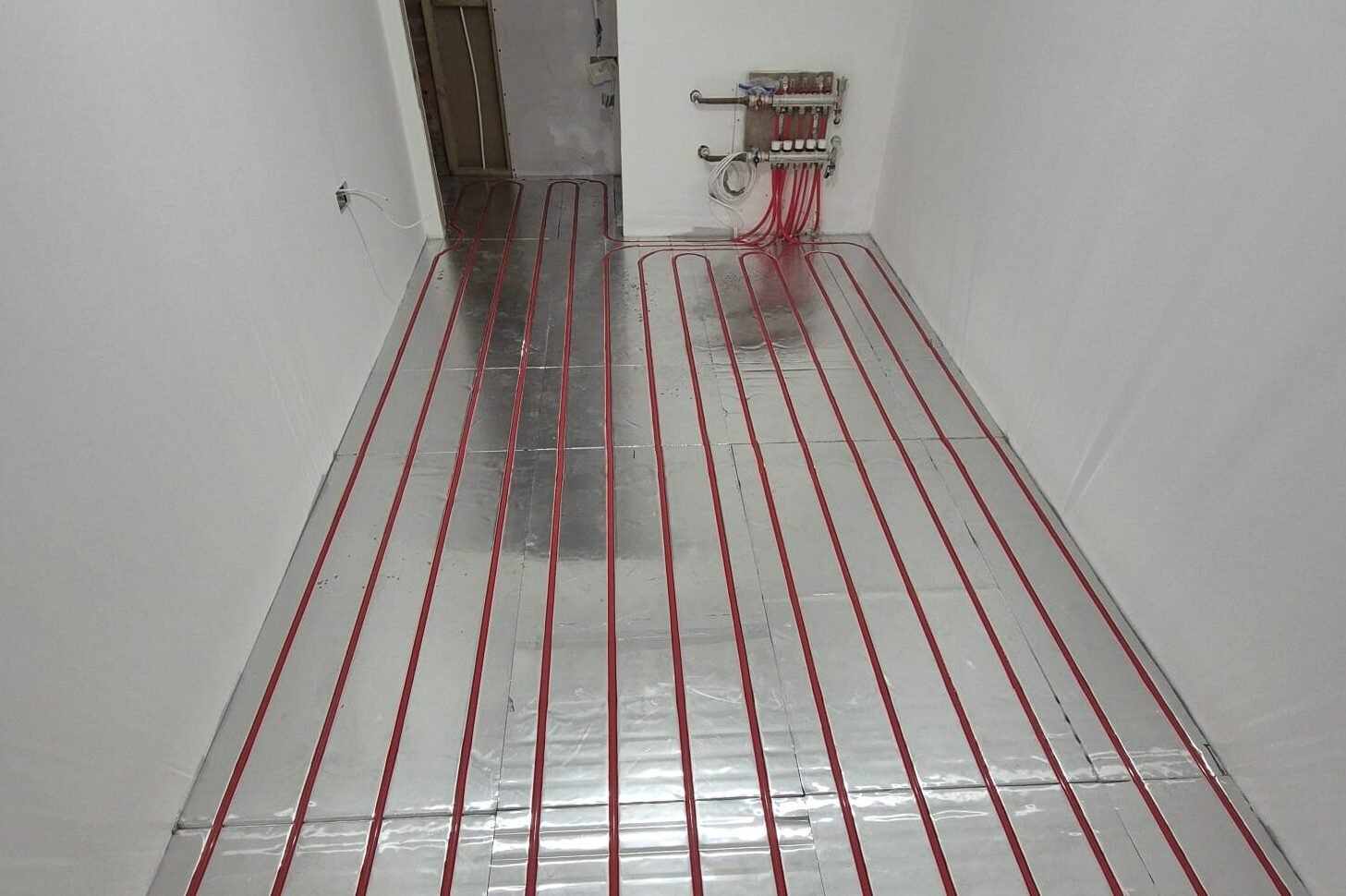
An underfloor heating loop is a continuous length of pipe that starts at the manifold, runs through the floor, and returns back to the manifold.
As warm water travels through the pipe, it gradually loses heat. The longer the circuit becomes, the more resistance (pressure drop) is created within the system.
If a loop becomes excessively long, several problems can occur:
- Reduced water flow
- Uneven floor temperatures
- Higher energy consumption
- Difficult system balancing
- Increased pump workload
- Cooler temperatures at the end of the circuit
This is why underfloor heating designers always aim to keep loops within recommended limits.
Recommended Maximum Loop Length for 16mm Pipe
For standard 16mm PE-RT, PEX, or MLCP underfloor heating pipe, the generally accepted maximum loop length is:
100 metres per circuit
This recommendation is widely used throughout the UK underfloor heating industry and helps maintain acceptable pressure losses and consistent heat output throughout the floor area.
In some cases, experienced designers may extend loops to approximately 110m, but this depends on:
- Flow temperature
- Heat source
- Pipe type
- Required heat output
- Available pump capacity
For most domestic projects, staying below 100m remains best practice.
Why 16mm Pipe Is the Industry Standard
16mm pipe has become the most popular choice for water underfloor heating systems because it provides an excellent balance between:
- Heat output
- Flow capacity
- Installation flexibility
- Pressure loss
- Cost effectiveness
Compared with smaller 12mm pipe systems, 16mm pipe can accommodate longer circuits while maintaining better hydraulic performance. This makes it ideal for:
- New build properties
- Screeded floors
- Large living rooms
- Open-plan spaces
- Heat pump systems
- Traditional boiler systems
Because of its larger internal diameter, 16mm pipe allows greater water flow with lower resistance than 12mm pipe.
What Happens If a Loop Exceeds 100m?
A common mistake during DIY installations is attempting to heat large rooms using a single loop.
For example, a large open-plan kitchen may require 150m–180m of pipe at 150mm centres.
Rather than installing one oversized circuit, the room should be divided into multiple loops.
If a single loop exceeds 100m, you may experience:
1. Uneven Heating
The water entering the circuit is hotter than the water returning to the manifold.
Longer loops increase temperature drop across the circuit, creating warmer and cooler areas within the room.
2. Higher Pressure Loss
The circulation pump must work harder to push water through longer pipe runs.
This increases energy consumption and can affect system efficiency.
3. Balancing Problems
Underfloor heating systems are easiest to balance when loop lengths are reasonably similar.
A mixture of very short and very long loops can make balancing more difficult.
4. Reduced System Performance
Even if the floor eventually reaches temperature, response times can increase and overall efficiency may suffer.
How Much Area Can One 100m Loop Cover?
The coverage depends primarily on pipe spacing.
200mm Centres
At 200mm pipe spacing, approximately 5 metres of pipe are required per square metre.
This means a 100m loop can typically cover:
Around 20m²
150mm Centres
At 150mm spacing, approximately 6.67 metres of pipe are required per square metre.
A 100m loop can therefore cover:
Around 15m²
100mm Centres
At 100mm spacing, approximately 10 metres of pipe are required per square metre.
A 100m loop would cover:
Around 10m²
These figures are approximate and do not include the flow and return tails between the manifold and the heated area.
Heat Pumps and Loop Length
Modern heat pumps operate at lower water temperatures than traditional boilers.
Because of this, underfloor heating systems connected to heat pumps often use:
- Closer pipe spacing
- More circuits
- Better-balanced loop lengths
Although the maximum loop length generally remains around 100m, heat pump systems benefit significantly from well-designed circuits and careful spacing selection.
For many heat pump installations, 150mm pipe centres are preferred to maximise floor output while maintaining low flow temperatures.
Should All Loops Be the Same Length?
Ideally, yes.
When designing a manifold layout, it is good practice to keep all loops within approximately 10–15% of each other.
For example:
- Loop 1 = 88m
- Loop 2 = 92m
- Loop 3 = 95m
- Loop 4 = 90m
This makes balancing much easier and ensures even heat distribution across all zones.
In reality, perfect equality is not always possible, but similar loop lengths will always perform better than a mix of very short and very long circuits.
12mm vs 16mm Pipe Loop Lengths
Many low-profile retrofit systems use 12mm pipe.
Because the internal diameter is smaller, flow resistance is higher.
Typical recommendations are:
| Pipe Size | Recommended Maximum Loop Length |
|---|---|
| 12mm | 60–80m |
| 16mm | 100m |
| 20mm | 120m |
This is one of the key reasons why 16mm pipe remains the preferred choice for most domestic underfloor heating installations.
Professional Design Makes the Difference
While the 100m rule is a useful guideline, every property is different.
A professional underfloor heating design should consider:
- Heat loss calculations
- Floor construction
- Pipe spacing
- Floor coverings
- Heat source
- Manifold location
- Flow temperatures
- Room usage
Simply dividing floor area by pipe length does not always produce the most efficient design.
At The Underfloor Heating Expert, we provide free CAD pipe layouts and system designs to ensure every circuit is correctly sized and balanced before installation.
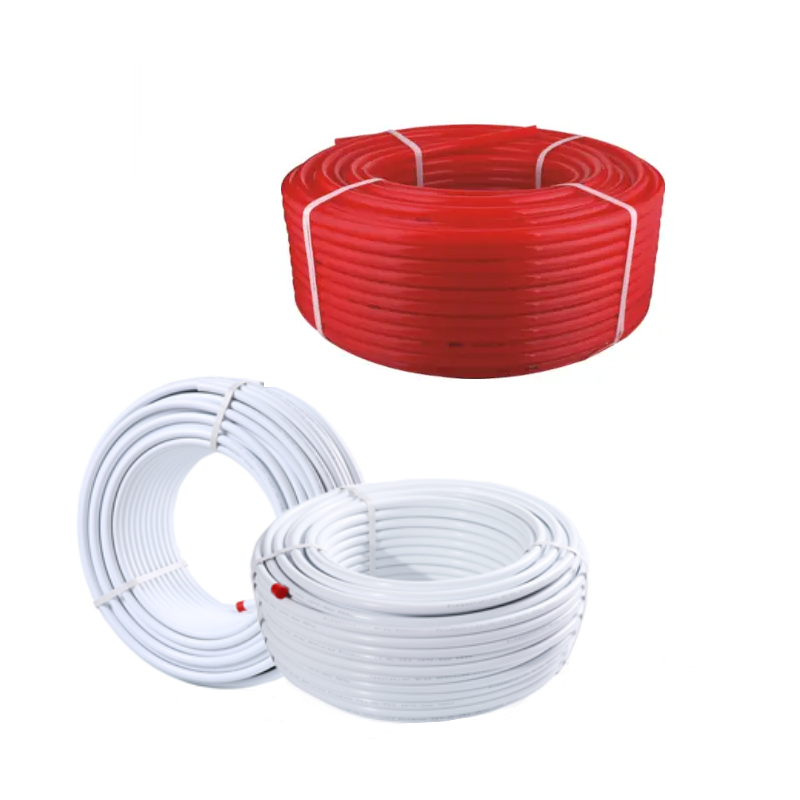
Our Pipes:
https://theunderfloorheatingexpert.com/category/pipes-water-underfloor-heating/
Final Thoughts
For most residential underfloor heating systems using 16mm pipe, the recommended maximum loop length is 100 metres per circuit.
Keeping loops within this limit helps to:
- Maintain efficient water flow
- Reduce pressure loss
- Improve heat distribution
- Simplify balancing
- Maximise system efficiency
If a room requires more than 100m of pipe, the solution is simple: divide the area into multiple loops connected to the manifold.
Correct circuit design is one of the most important factors in achieving a comfortable, energy-efficient underfloor heating system that performs reliably for many years.
Need help designing your project? Contact The Underfloor Heating Expert today for a free quotation and CAD pipe layout tailored to your property.
