
Heat Pump or Boiler for Underfloor Heating: Which Is Best for Your Home?
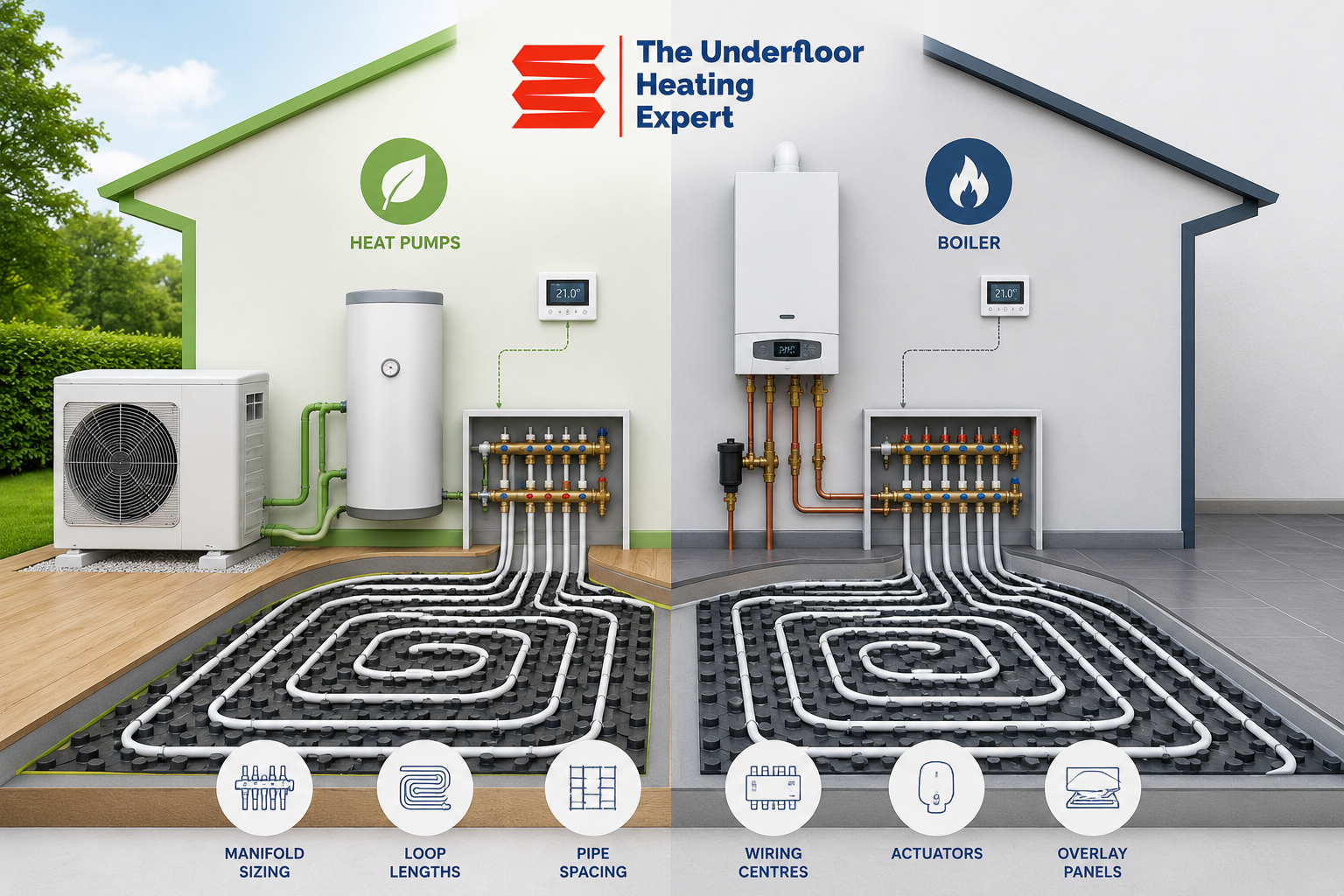
Heat Pump or Boiler for Underfloor Heating: Which Is Best for Your Home?
Underfloor heating has become one of the most popular heating solutions in the UK thanks to its energy efficiency, improved comfort, and ability to work with a wide range of heat sources. Whether you are building a new home, renovating an existing property, or upgrading your heating system, one of the most important decisions is choosing between a heat pump and a traditional boiler.
Both systems can work effectively with underfloor heating, but there are significant differences in efficiency, running costs, installation requirements, and long-term performance. In this guide, we compare heat pumps and boilers for underfloor heating to help you decide which option is best for your project.
Why Underfloor Heating Works So Well
Unlike traditional radiators that require high water temperatures, underfloor heating operates at much lower temperatures while still providing excellent comfort throughout the room.
The large heated floor area distributes warmth evenly, eliminating cold spots and creating a comfortable living environment. This low-temperature operation makes underfloor heating highly efficient and particularly suitable for modern heating technologies.
A well-designed system takes into account factors such as manifold sizing, loop lengths, pipe spacing, insulation levels, and heat loss calculations to ensure optimum performance.
Heat Pumps and Underfloor Heating
Heat pumps are often considered the ideal partner for underfloor heating because both systems operate efficiently at lower temperatures.
Air source and ground source heat pumps typically supply water temperatures between 35°C and 45°C, which matches the requirements of most underfloor heating systems perfectly.
Advantages of Heat Pumps
Lower Running Costs
Because heat pumps transfer heat rather than generate it directly, they can produce several units of heat for every unit of electricity consumed. This can result in significantly lower energy bills when compared to conventional heating systems.
Improved Energy Efficiency
Heat pumps operate most efficiently when paired with low-temperature heating systems. Underfloor heating allows the heat pump to run at its optimal efficiency level throughout the year.
Reduced Carbon Emissions
As the UK continues moving towards low-carbon heating solutions, heat pumps are becoming increasingly popular. When powered by renewable electricity, they can dramatically reduce household carbon emissions.
Consistent Heat Distribution
The continuous low-temperature operation of a heat pump complements underfloor heating perfectly, maintaining a stable indoor temperature without sudden fluctuations.
Design Considerations for Heat Pumps
When designing an underfloor heating system for a heat pump, careful attention should be paid to:
- Pipe spacing
- Loop lengths
- Floor construction
- Heat loss calculations
- Manifold sizing
In many heat pump projects, pipe spacing may need to be reduced to maximise heat output while maintaining low flow temperatures. Typical spacing can range from 100mm to 200mm depending on room requirements.
Loop lengths should also be carefully planned. For 16mm pipe, we generally recommend keeping individual loops below 100 metres to maintain balanced flow rates and efficient system performance.
Boilers and Underfloor Heating
Traditional gas boilers remain one of the most common heat sources in UK homes. Modern condensing boilers can work very effectively with underfloor heating systems and often offer a lower initial installation cost than a heat pump.
Advantages of Boilers
Lower Upfront Cost
For many homeowners, the main advantage of a boiler is the lower installation cost. If a suitable boiler is already installed, it may be possible to connect an underfloor heating system with minimal modifications.
Faster Heat-Up Times
Because boilers can generate higher water temperatures, they can sometimes respond more quickly to sudden heating demands.
Suitable for Retrofit Projects
Many older properties can easily integrate underfloor heating with an existing boiler system, making it an attractive option for renovation projects.
Design Considerations for Boiler Systems
When connecting underfloor heating to a boiler, a mixing set is often used to reduce water temperature before it enters the floor circuits.
The system design still requires proper consideration of:
- Manifold sizing
- Loop lengths
- Pipe spacing
- Flow balancing
- Room zoning
Modern systems also utilise actuators and room thermostats to provide precise temperature control in each room.
Controls, Wiring Centres and Actuators
Whether you choose a heat pump or a boiler, effective controls are essential.
Most modern underfloor heating systems use wiring centres to connect room thermostats, actuators, pumps, and heat sources. The wiring centre acts as the central control hub, ensuring all components communicate correctly.
Actuators are installed on the manifold and automatically open or close individual circuits based on thermostat demand. This allows each room to be controlled independently, improving comfort and reducing energy consumption.
Smart controls can further enhance efficiency by allowing users to manage heating schedules remotely through smartphone apps.
Overlay Panels for Renovation Projects
One concern homeowners often have when installing underfloor heating is floor height.
This is where overlay panels offer an excellent solution.
Overlay panels are specially designed boards that sit on top of the existing floor structure, allowing underfloor heating pipework to be installed without the need for major excavation or screeding.
These systems are particularly popular in refurbishment projects where maintaining floor levels is important.
Many overlay panels incorporate aluminium heat diffusion layers that help distribute heat evenly across the floor surface, improving system response times and efficiency.
Both heat pumps and boilers can be used successfully with overlay panel systems when correctly designed.
Which Option Is Better?
The answer depends on your property, budget, and long-term goals.
Heat Pump May Be Best If:
- You are building a new home.
- You want maximum energy efficiency.
- You are aiming to reduce carbon emissions.
- You plan to stay in the property long-term.
- You want to future-proof your heating system.
Boiler May Be Best If:
- You already have a modern efficient boiler.
- You want lower upfront installation costs.
- You are carrying out a smaller renovation project.
- A heat pump installation is not practical for your property.
Final Thoughts
Both heat pumps and boilers can work extremely well with underfloor heating when the system is designed correctly.
The key to achieving excellent performance is not simply choosing the heat source but ensuring the underfloor heating system is properly engineered. Factors such as manifold sizing, loop lengths, pipe spacing, wiring centres, actuators, and suitable overlay panels all play a vital role in overall efficiency and comfort.
At The Underfloor Heating Expert, we provide complete underfloor heating solutions, including free CAD pipe layout designs, manifold selection, controls, and system quotations tailored to your project requirements.
If you are planning a new installation and would like expert advice, contact our team today for a free quotation and system design.
